At Essential Sports & Spine Solutions in Columbus, OH, we use Platelet-Rich Plasma (PRP) as part of a comprehensive, evidence-informed approach to musculoskeletal and spine care.
PRP is created from a small sample of your own blood, concentrated to separate the platelet-rich layer. It is a minimally invasive, non-surgical treatment that is injected under ultrasound and/or fluoroscopic guidance into targeted areas such as joints, tendons, ligaments, or spine-related structures.
It’s not a “miracle cure,” but for the right patient, PRP can be a powerful tool to support tissue healing, reduce irritation, and improve function. By enhancing the body’s natural healing capacity, PRP therapy has been shown to lead to a more rapid, efficient and more thorough healing and stabilization of tissues, bringing them back to a healthy state.
Platelet-Rich Plasma (PRP) Treatment in Columbus, OH FAQs
At Essential Sports & Spine Solutions, PRP isn’t a stand-alone product—it’s part of a thoughtful, individualized plan that might also include:
- Prolotherapy, BMAC, or Microfat in selected cases
- Image-guided spine and joint procedures
- MLS laser treatments
- Strength and conditioning strategies
- Lifestyle and load management counseling
What sets us apart:
- Interventional spine and sports medicine expertise
- High-precision ultrasound and fluoroscopic guidance
- Focus on opioid-sparing, function-first care
- Honest conversations: we’ll tell you when PRP is not the right optiion
At your initial visit we will:
- Review your symptoms, goals, and activity demands
- Examine the involved area and related biomechanics
- Review or order imaging if needed
- Discuss all reasonable options: PRP, other orthobiologics, injections, therapy, or surgical referral when appropriate
If PRP is a good fit, we’ll walk you through:
- The target structures (joint, tendon, ligament, or spine-related tissue)
- Number of injections recommended
- How PRP fits into your broader treatment and rehab plan
- Cost and expected timeline for follow-up
On the Day of Your PRP Procedure
- A small amount of blood is drawn from your arm.
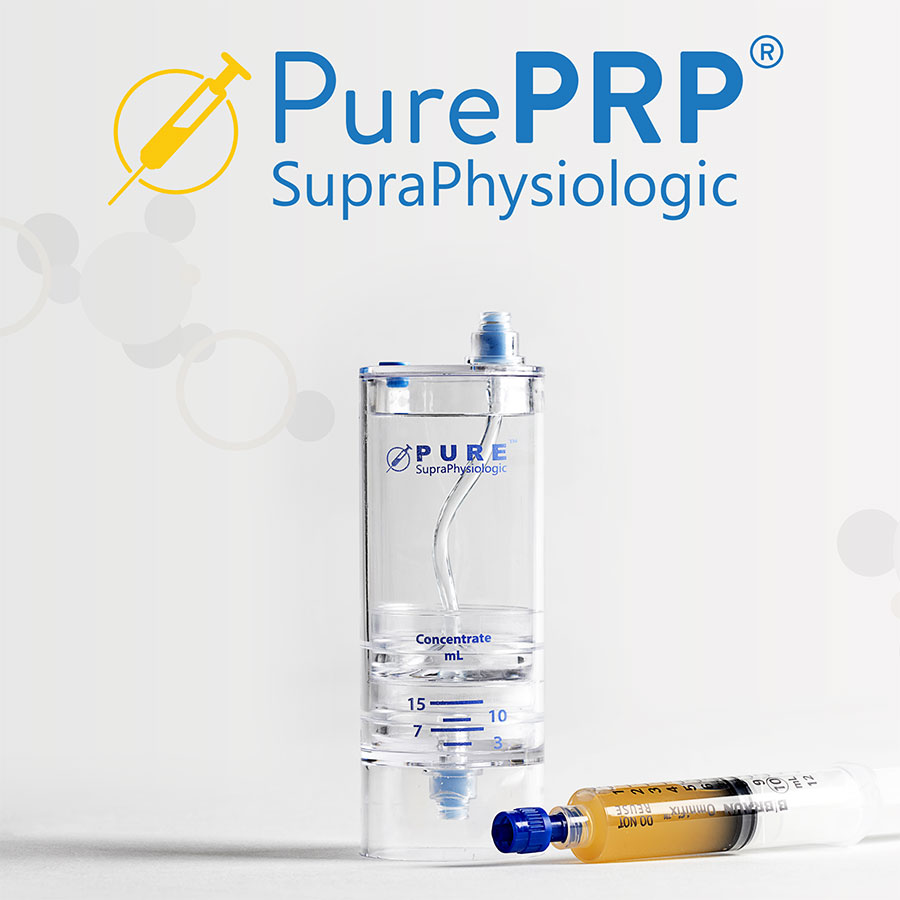
- The sample is placed into a PRP processing system to concentrate your platelets.
- The target area is cleaned, anesthetized as appropriate, and visualized with ultrasound and/or fluoroscopy.
- PRP is injected precisely into the tissue we’ve identified as a pain generator or contributor.
Most people go home the same day and can return to light activities quickly, with some soreness expected around the treated area.
For carefully selected patients, PRP may be an option for certain spine-related pain generators, such as:
- Facet joint–related pain (cervical or lumbar)
- SI joint irritation
- Some disc-related or degenerative changes (degenerative disc disease)
Every spine is unique, so we start with a detailed history, physical exam, and review of imaging (X-ray, MRI, prior procedures) to confirm whether PRP is appropriate—or if another interventional or non-regenerative treatment is better.
Your blood contains platelets—cell fragments rich in growth factors and signaling molecules that help coordinate healing. With PRP:
- We draw a small sample of your blood.
- The blood is processed in a specialized centrifuge to concentrate the platelets.
- The PRP is injected into the precise area of irritation or injury using ultrasound or fluoroscopic guidance.
The goal is to support your body’s natural repair processes, not to “grow a new joint” or promise a cure. Improvement can be gradual over weeks to months, and we often combine PRP with:
- Targeted physical therapy
- Strength and mobility programs
- Sleep, stress, and load management strategies
- MLS laser and other non-operative treatments, when appropriate
PRP is most often considered for persistent pain or injury that hasn’t responded to rest, medications, or basic therapy. In our practice, we commonly use PRP as part of a treatment plan for:
- Knee osteoarthritis and knee pain
- Tendon problems (tennis elbow, golfer’s elbow, patellar tendon, Achilles issues)
- Shoulder pain (rotator cuff tendinopathy, biceps tendon, labral irritation)
- Plantar fasciitis and foot pain
- Hip and gluteal tendinopathy
- Spine-related pain (facets, SI joint, some disc-related symptoms in select cases)
- Sports and overuse injuries in active adults and athletes
Not everyone is a candidate for PRP. During your evaluation, we’ll review your history, imaging, exam, and goals to determine whether PRP or another treatment makes more sense.
Although PRP in musculoskeletal applications is well supported by clinical evidence, the broader use of PRP therapy in treating pain is still considered relatively new at this time. Because of this, PRP is not typically covered by commercial insurance companies or Medicare and is provided as a cash-pay procedure. Our office staff can assist you with additional questions.
The cost of a PRP treatment varies based on the procedure performed. Our office staff can assist you with payment options and answer any other questions you may have.
PRP can be highly effective in substantially reducing pain in patients with even advanced arthritis. Often, patients are able to delay total knee replacement for years with PRP therapy.
PRP injections are usually well-tolerated with a local anesthetic injection. In cases where there is increased anxiety associated with pain, a mild sedative may be used.
Unlike cortisone or other injectable medications, PRP is a natural substance derived from your body, limiting adverse reactions. As with any injection, there is a minor risk of infection, bleeding, and damage to local structures. To limit this, your provider will cleanse the area and follow universal precautions.
PRP is ideal for patients who have not found success in more conservative or traditional treatments, such as steroid injections, viscosupplements, physical therapy or bracing. PRP may also be an effective option for candidates that wish to attempt to delay or avoid a surgery.
- Knee
- Shoulder
- Foot & Ankle
- Elbow, Hand & Wrist
- Spine / Back
- Hip
- Minimally invasive, non-surgical procedure
- Enhanced healing with your own natural healing factors
- Extremely low incidence of side effects
- Minimal downtime – Ability to carry on with your usual routine post injection
Pre-procedural restrictions are necessary to ensure a good quality PRP with high platelet integrity. Please let your provider know what medications and supplements you are currently taking so that they may advise you appropriately.
Please adhere to the following guidelines:
- Stop NSAIDs 1-week pre-procedure (2 weeks is most optimal)
- Ideally, stop any blood thinners 3-5 days pre-procedure. Consult with your prescribing provider to ensure that this can be done safely
- Stop any anti-inflammatory supplements 1 week prior to the procedure (eg. Vitamin E, turmeric, curcumin, fish oil, ginseng, ginkgo, ginger, garlic extract, etc.)
- Arrive early to your appointment and make sure that you are well-hydrated
The healing that occurs from PRP therapy is usually long-term. However, if the etiology of the injury is not addressed (such as flat feet leading to knee or hip pain), then repeated wear and tear will continue to degrade the joints and/or tendons. For this reason, a comprehensive approach that includes PRP therapy, structured physical therapy, and other adjunctive therapies are recommended.
Your treatment plan is created based on the severity and duration of the injury or degeneration. Usually, one treatment with PRP is sufficient for returning to desired activities after 6-8 weeks of rehabilitation and at-home exercises and progression. However, more severe conditions may need ‘booster’ shots after four weeks. Your provider will evaluate your situation and advise if you need repeat treatment after your first follow-up appointment.
Immediately after the procedure, it is recommended that you not soak your body in water for 24 hours (ie. baths, hot tubs) to mitigate the risk of infection at the injection site. Showering is fine. Do not take anti-inflammatory drugs (NSAIDs) For pain relief, extra-strength Tylenol is recommended. Ice is not recommended as it causes vasoconstriction. That said, heat is acceptable for pain relief.
Most patients report an increase in pain and some swelling immediately following the injection, lasting up to several days. This is normal and results from the body’s natural inflammatory response flooding the region with healing factors. Please notify your physician if this increased pain does not resolve itself within three days. At about 2 weeks post-procedure, most patients will experience some relief from pre-injection pain levels. The greatest benefit is typically reported at 4-6 weeks post-injection and can occur up to 6-9 months after.
To maximize recovery, we strongly suggest that you adhere to the guidelines recommended by your treating physician. This may include short-term non-weight bearing protocols, reduced activity, formal physical therapy, and at-home exercises.
Many patients resume their activities immediately following the procedure. Some patients experience a mild flare-up of symptoms following a PRP injection. This will resolve in a day or two. Your provider will discuss specific limitations and rehab protocols with you before leaving the office.
PRP treatments are typically given in the doctor’s clinic and can take between 30 minutes to an hour, from pre-procedural prep all the way through to putting a bandaid on the injection site.
Blood is drawn from your arm and run through a centrifuge which separates the blood into its components. Plasma, which contains the beneficial platelets, is collected and further refined. The PRP solution is then injected into the affected area (joint space, disc or soft tissue such as tendons or ligaments). Ultrasound or fluoroscopic guidance is frequently used to ensure precise delivery of PRP in a procedure that takes under half an hour.